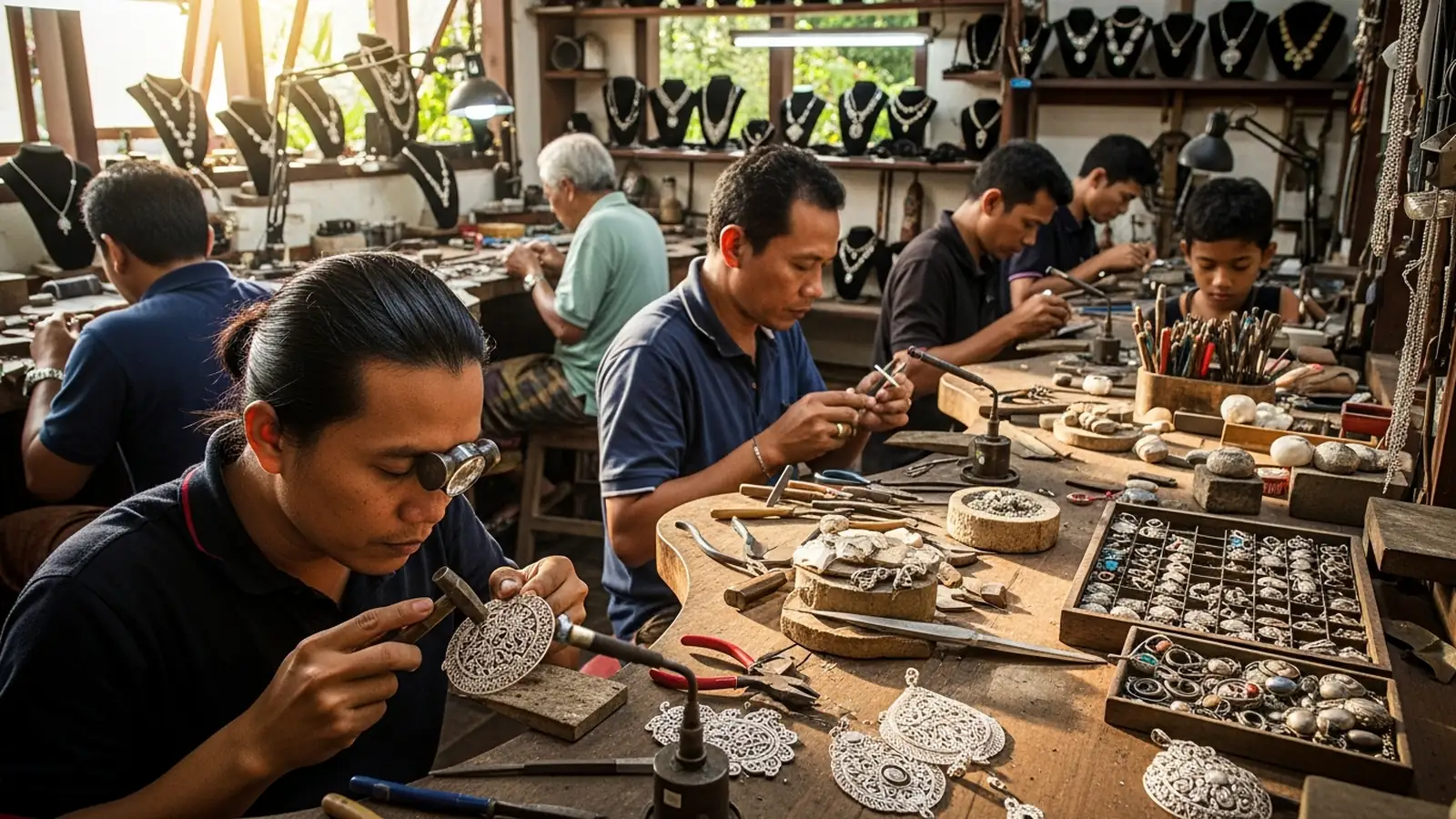
 Celuk · Bali Jewelry Export Hub
Bali Jewelry Price: Wholesale & Export
Discover premium Bali jewelry at competitive export prices. Our collection includes handcrafted silver, gold, and pearl pieces from Bali's renowned artisans. MOQ and FOB terms available for international buyers.
What are you sourcing?
Tell us your requirements and we'll guide you to the right products and next steps.
For international buyers seeking unique, handcrafted jewelry, Bali offers a diverse range of products at competitive prices. With a well-established export ecosystem, particularly in Celuk, Gianyar, and other key regions, Bali stands as a leading hub for sterling silver and fashion jewelry. Our platform connects you directly to the heart of Bali’s jewelry craftsmanship, ensuring you receive quality products tailored to your business needs.
Understanding Bali Jewelry Prices and Options
When considering Bali jewelry, it’s essential to understand the pricing structure and available options. The base price for simple 925 sterling silver rings starts at USD 3–8 per piece for smaller orders of 50–100 pieces. This price increases with design complexity and branding requirements. Earrings and pendants usually start around USD 4–10 per piece. For those interested in bulk fashion jewelry, prices can be as low as USD 0.50–2 per piece for orders exceeding 500 pieces. These indicative prices provide a starting point, but final costs depend on factors like design, materials, and order volume. Confirm specific details with us to tailor your order according to your budget and design preferences.
Materials and Craftsmanship
Bali’s jewelry is renowned for its use of sterling silver (925) and silver-plated brass, often complemented by semi-precious stones such as garnet, amethyst, peridot, moonstone, and topaz. The craftsmanship in Bali, particularly in Celuk and surrounding areas, is a significant draw for buyers worldwide. Artisans combine traditional techniques with modern designs, resulting in unique pieces that appeal to diverse markets. The lower local wage rates for skilled artisans contribute to competitive pricing, making Bali an attractive option for businesses seeking quality, handcrafted jewelry. The balance between quality materials and skilled craftsmanship ensures that the jewelry from Bali stands out in international markets.
Logistics and Shipping
Efficient logistics are crucial for exporting jewelry from Bali. Most exports are facilitated through air freight, primarily via Denpasar (Ngurah Rai International Airport), with shipments often consolidated through freight forwarders in Denpasar or Jakarta. Small parcels are typically sent via international couriers like DHL, FedEx, UPS, or EMS, with transit times to the US or EU ranging from 5–10 days. Larger orders are shipped as air cargo under an Air Waybill (AWB), ensuring timely and secure delivery. Buyers should be aware of potential delays during peak tourism seasons (June–September, December–January), which can affect production lead times.
Regulatory Compliance for Export
Exporting jewelry from Bali requires adherence to Indonesian customs regulations and documentation, including commercial invoices, packing lists, and HS code classification. Jewelry is typically classified under HS codes in Chapter 71, such as 7113 for precious metal articles. While Indonesia does not impose export duties on most jewelry, VAT, luxury taxes, or other fees may apply depending on the product type and destination agreements. It’s crucial for exporters to stay informed about compliance requirements, especially when shipping to regions like the EU, which impose specific restrictions like nickel release limits under REACH regulations.
Minimum Order Quantities and Payment Terms
- Minimum Order Quantity (MOQ) for silver jewelry: 10–24 pieces per design or USD 500–1,000 total order value.
- Payment terms: 50% deposit upon order, 50% balance before shipment.
- Preferred payment methods: Bank transfer (SWIFT) and PayPal for smaller orders.
These terms ensure a smooth transaction process, safeguarding both buyers and sellers in international trade. Long-term clients may negotiate partial credit or net terms, reflecting the trust and reliability built over time.
Choosing the Right Exporter
Selecting a reputable exporter is vital for a successful partnership. Many Bali jewelry exporters operate under Indonesian business entities like PT (Perseroan Terbatas) or CV (Commanditaire Vennootschap), influencing their ability to issue formal invoices and contracts. Foreign buyers often prefer PT-registered exporters for their ability to handle formal documentation and foreign currency transactions through Indonesian banks. Establishing a relationship with a reliable exporter ensures that you receive consistent quality and service, tailored to your business needs.
Ensuring Quality and Compliance
Quality assurance is a priority for Bali jewelry exporters. Despite Indonesia’s less stringent hallmarking enforcement, exporters typically self-declare fineness (e.g., “925 sterling”) and may provide laboratory test reports for large buyers, especially those shipping to the EU. Buyers must verify hallmarking and fineness marking rules in their jurisdictions, as some require specific marks like “925” plus maker’s or assay office marks. Working with an exporter who provides transparent quality assurance helps maintain compliance and customer satisfaction across international markets.
Trends in Bali Jewelry Design
Bali’s jewelry design scene has evolved to incorporate global trends while maintaining its unique cultural aesthetic. Recent years have seen a rise in minimalist designs that emphasize clean lines and subtle details, appealing to modern consumers who favor understated elegance. Additionally, the use of ethically sourced materials has become a significant trend, with buyers increasingly seeking pieces that align with sustainable practices. Gemstones like labradorite and turquoise are frequently featured, adding vibrant color and character to the designs. Customization has also gained popularity, with many artisans offering personalized pieces that allow buyers to incorporate initials or meaningful symbols, further enhancing the personal connection to the jewelry.
Leveraging Technology in Jewelry Production
The integration of technology into jewelry production has transformed the industry in Bali. Computer-aided design (CAD) allows artisans to create intricate designs with precision, reducing production time and minimizing errors. This technological advancement enables the creation of complex patterns and detailed engravings that were previously challenging to achieve by hand. 3D printing technology is also making waves, allowing for the rapid prototyping of new designs, which speeds up the development process and allows for more experimentation. These technologies, combined with traditional craftsmanship, empower Bali’s artisans to produce innovative jewelry that meets the demands of a global market.
For more information or to begin your journey in sourcing the finest Bali jewelry, contact us today. Our team is ready to assist you with detailed quotations and guidance tailored to your needs.